



High School Curriculum - Industrial Robotics: Concepts and Applications - Based on Mirobot Robotic Arm
High School Curriculum - Industrial Robotics: Concepts and Applications - Based on Mirobot Robotic Arm
Available in stock
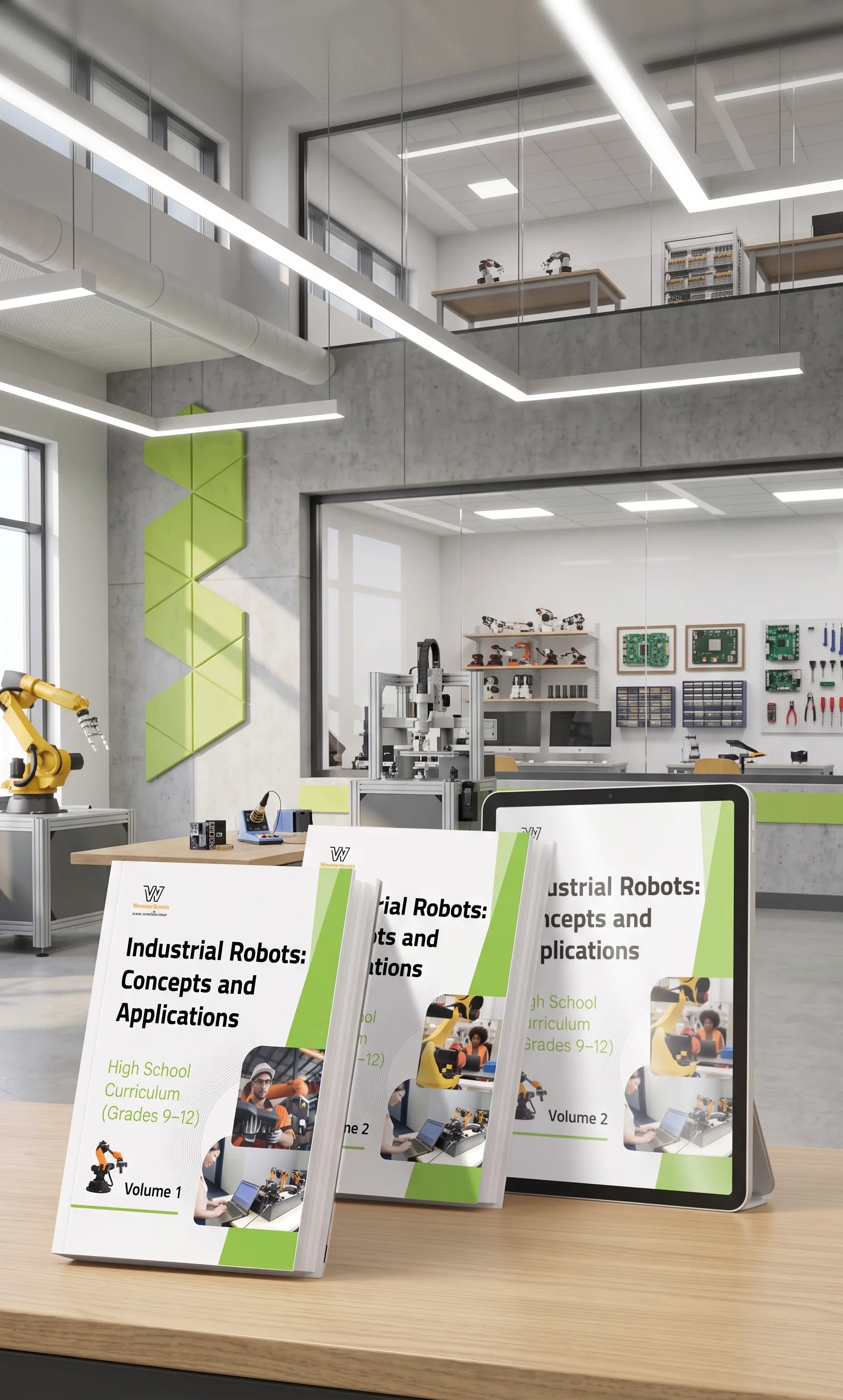
A complete, classroom-ready high school industrial robotics curriculum built around the WLKATA Mirobot 6-axis robotic arm. Designed for CTE, robotics, engineering, mechatronics, and advanced manufacturing programs, the course combines structured instruction with hands-on programming and automation practice.
Course Highlights
- 34 instructional hours across an 11-week suggested schedule
- Approximately 3–4 hours of instruction per week
- 6 core learning modules
- 500+ pages of curriculum and student learning content
- Hands-on Mirobot programming, motion control, and automation activities
- Teacher resources organized by week and instructional hour
- Ready for classroom, robotics lab, or CTE pathway use
- Free sample chapters available for review
What’s Included
- 1× Printed curriculum book
- 1× Digital curriculum book
- PowerPoint slides for all 34 instructional hours
- Student reading materials for each instructional hour
- Quizzes and answer keys
- Teacher-ready instructional resources
Couldn't load pickup availability
- Order will be shipped out from US warehouse in 1-3 business days once being processed.
ABOUT THE Curriculum
A classroom-ready path into industrial robotics.
Designed for high school CTE, robotics, engineering, mechatronics, and advanced manufacturing programs, this curriculum gives students a structured introduction to industrial robotics through both classroom instruction and hands-on work with the WLKATA Mirobot robotic arm.
34
instructional hours
11
suggested weeks
3-4
hours per week
6
core learning modules
Complete teacher resources — lesson plans, PPT slides, student readings, quizzes, and answer keys
Hands-on robotics learning with programming, motion control, and automation activities
Built around the WLKATA Mirobot 6-axis robotic arm
500+ pages of ready-to-use curriculum content
Free sample chapters available for preview
WHY EDUCATORS CHOOSE IT
A Complete, Classroom-Ready CTE
Curriculum
Teacher-ready package
Teachers receive weekly guides, lesson plans, PPTs, student readings, quizzes, answer keys, and supplemental resources.
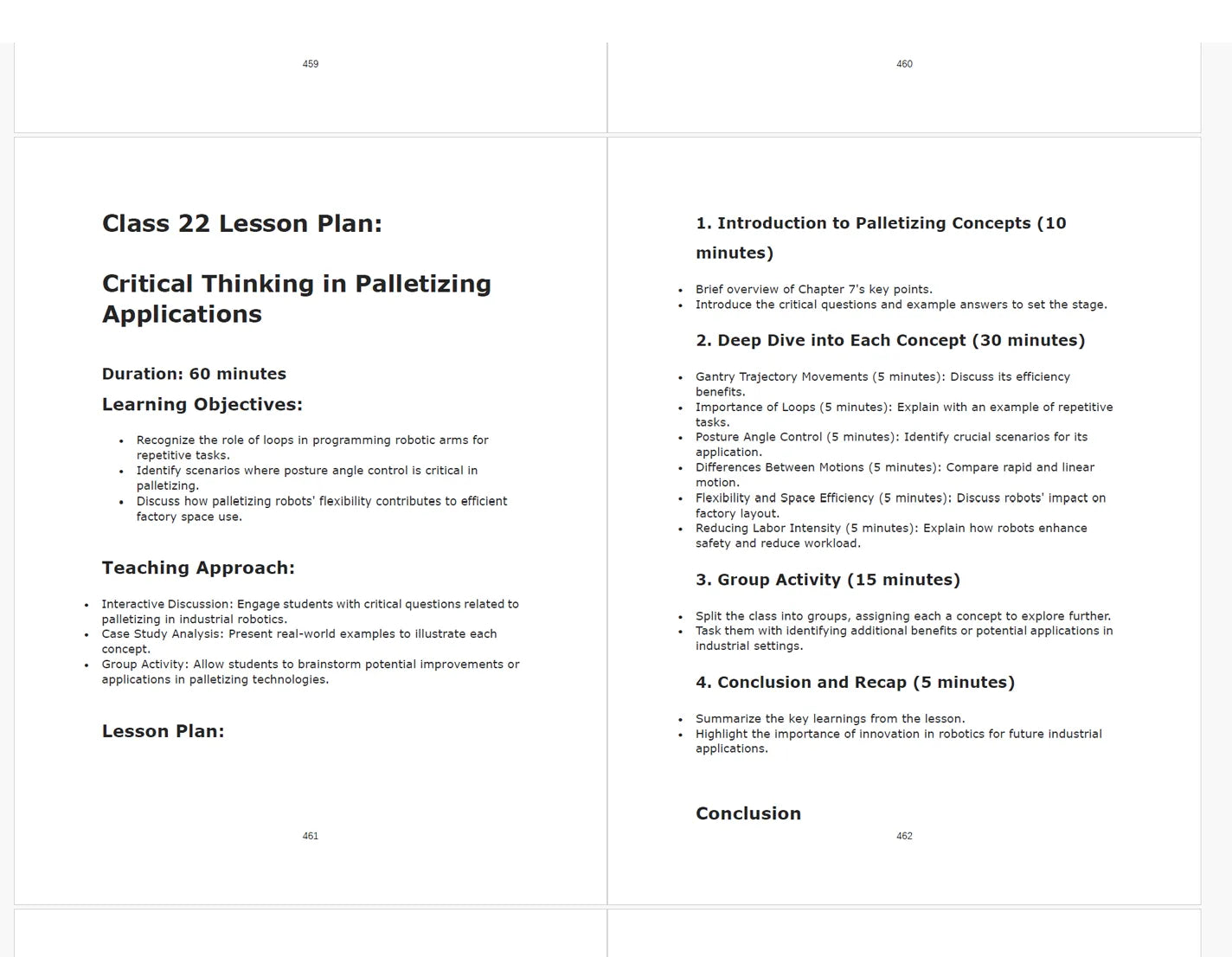
Teacher's Weekly Guides and Lesson Plans
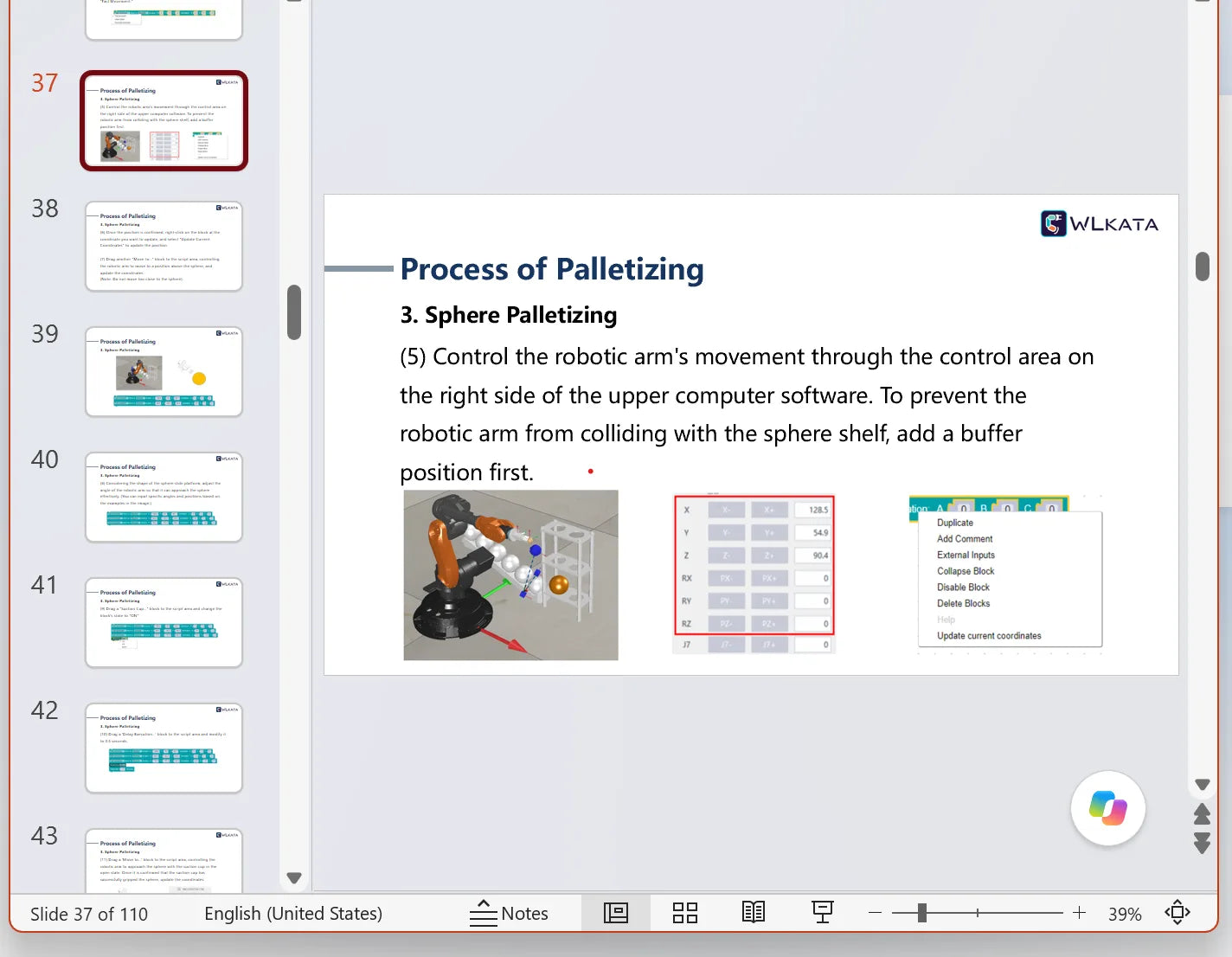
Presentation Slides for Each Lesson
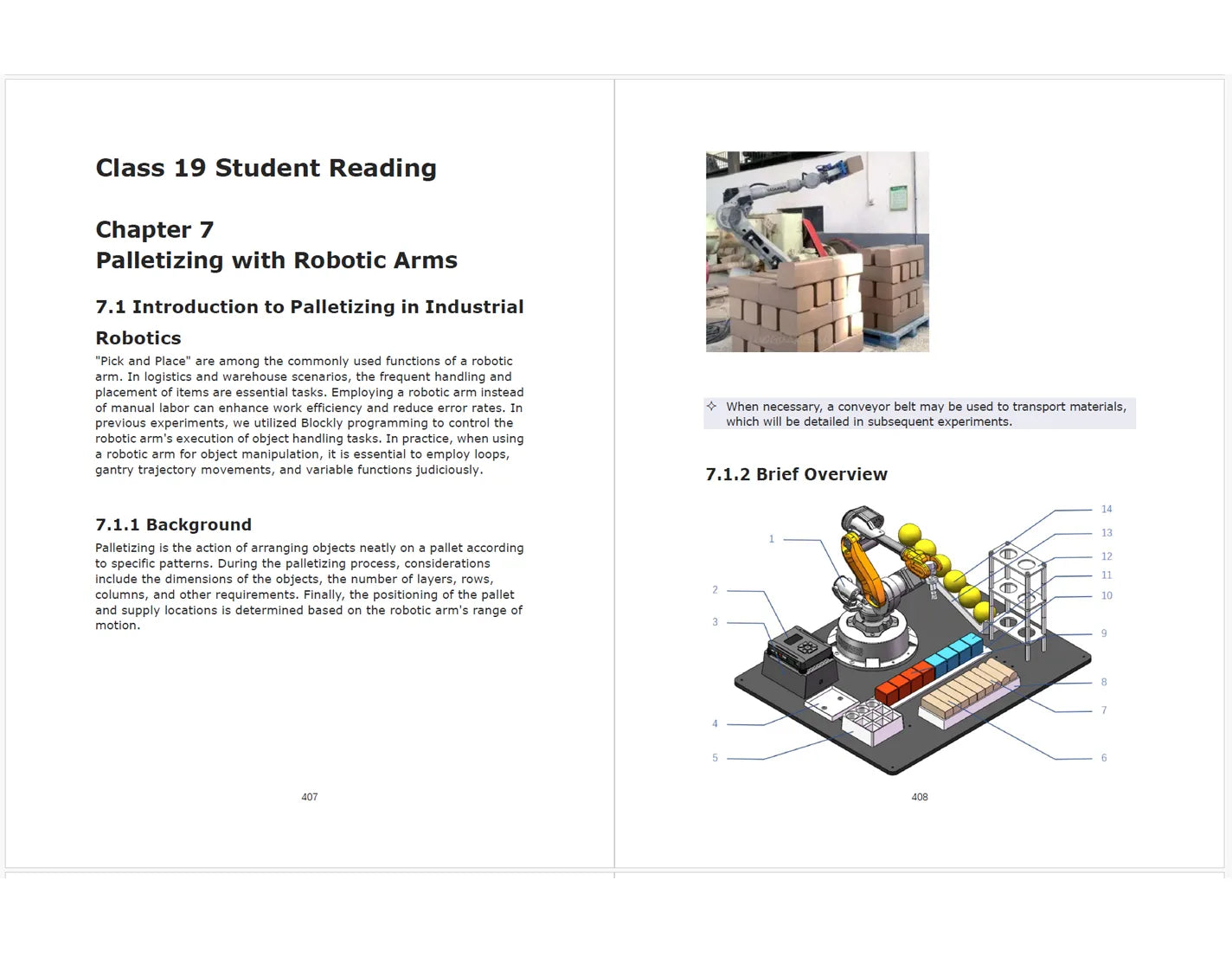
Student Readings for Each Lesson
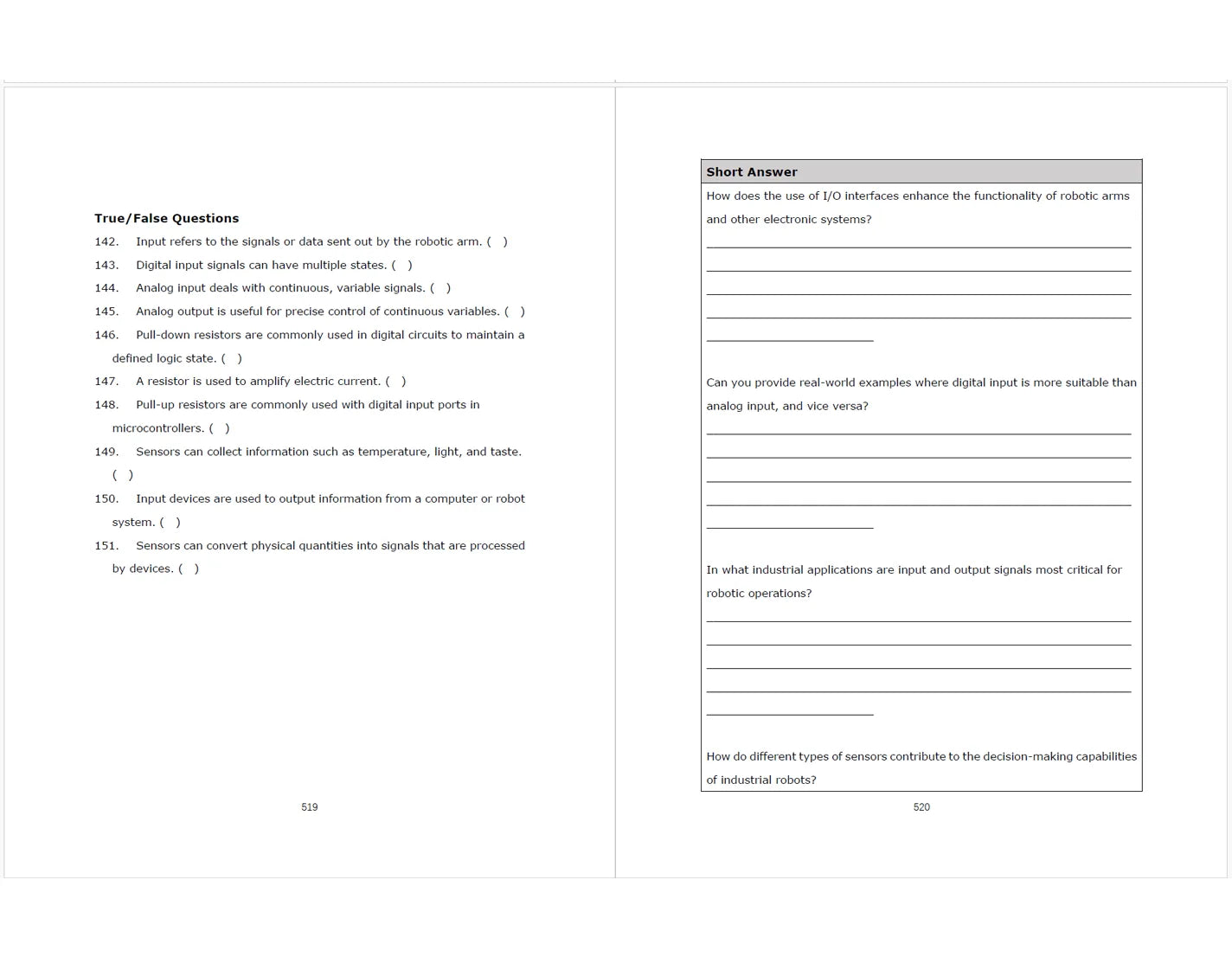
Quizzes and Answer Keys
Curriculum Schedule
34 Hours of Ready to Teach Instruction
The curriculum is organized into 11 weekly units, with approximately 3 hours of instruction per week. Each week combines teacher-led instruction, presentation materials, student readings, hands-on robotics activities, and assessment — so educators can see exactly what to teach, what students will do, and what resources are needed without building lessons from scratch.
Teachers can follow the complete program or select individual weeks, lessons, and activities to fit their existing CTE courses and schedules.
Published duration
34 hrs
Suggested pacing: 11 weeks
10 weeks
at 3 hours each
1 week
at 4 hours
3-4 hrs
average per week
CTE-ready
semester, modular, or unit use
Experiments/labs
13.5 hrs
Hands-on robot activities, experiments, and applications.
Instruction/demos
6.5 hrs
Teacher explanation, safety, concepts, and demonstrations.
Programming/operation
8.5 hrs
Manual operation, teach programming, and workflow practice.
Quiz/review
3.5 hrs
Checks for understanding, review, and reflection.
Career Connection
2.0 hrs
Final application, career connection, or showcase.
Week
Focus
Total
Experiments
/Labs
Instruction
/Demos
Programming
/Operation
Quiz
/Review
Final Application
Week 1
Industrial robotics introduction
3.0
1.0
1.5
0
0.5
0
Week 2
Safety and workspace habits
3.0
1.5
1.0
0.5
0
0
Week 3
Manual operation basics
3.0
1.5
0.5
1.0
0
0
Week 4
Teach programming foundations
3.0
1.0
0.5
1.5
0
0
Week 5
Programming practice
3.0
1.0
0.5
1.0
0.5
0
Week 6
End effectors and guided experiments
3.0
1.5
0.5
0.5
0.5
0
Week 7
Graphical programming logic
3.0
1.0
0.5
1.5
0
0
Week 8
Application lab and motion practice
3.0
1.5
0.5
1.0
0
0
Week 9
Integrated applications
3.0
1.5
0.5
0.5
0.5
0
Week 10
Assessment and troubleshooting
3.0
1.0
0.5
0.5
1.0
0
Week 11
Final application and career connection
4.0
1.0
0
0.5
0.5
2.0
Total across 11 weeks: 34.0 hours = 13.5 lab + 6.5 instruction + 8.5 programming + 3.5 review + 2.0 final application.
CURRICULUM AT A GLANCE
What Students Learn
Students build practical skills in industrial robotics, safety, robot operation, programming, end effectors, and automation through hands-on learning with the WLKATA Mirobot.
MODULE 01
Industrial Robotics Fundamentals
What industrial robots are, how robotic arms are structured, and where they are used in modern automation.
MODULE 02
Robot Safety
Safe operation, workspace awareness, and the habits students need when working with robotic systems.
MODULE 03
Manual Robot Operation
Basic movement, positioning, and direct interaction with the robot arm.
MODULE 04
Teach Programming
How to record positions, build repeatable routines, and understand robot task logic.
MODULE 05
End Effectors
How robot tools such as grippers make robotic systems useful for real tasks.
MODULE 06
Graphical Programming & Applications
Using programming logic to create practical automation workflows and applications.
PROGRAM FIT
Who This Curriculum Is For
Best fit for
High school CTE robotics programs
Engineering and pre-engineering courses
Mechatronics and automation pathways
Advanced manufacturing classrooms
STEM labs and makerspaces
Career-connected industrial technology learning
Especially useful when you need
A classroom-ready industrial robotics curriculum
Teacher-ready lesson guidance and assessment
Hands-on robotic-arm learning
Content beyond competition robotics
A clean 34-hour instructional framework
A pathway toward automation and robotics careers
FREE SAMPLE — HIGH SCHOOL CURRICULUM
Preview the Curriculum
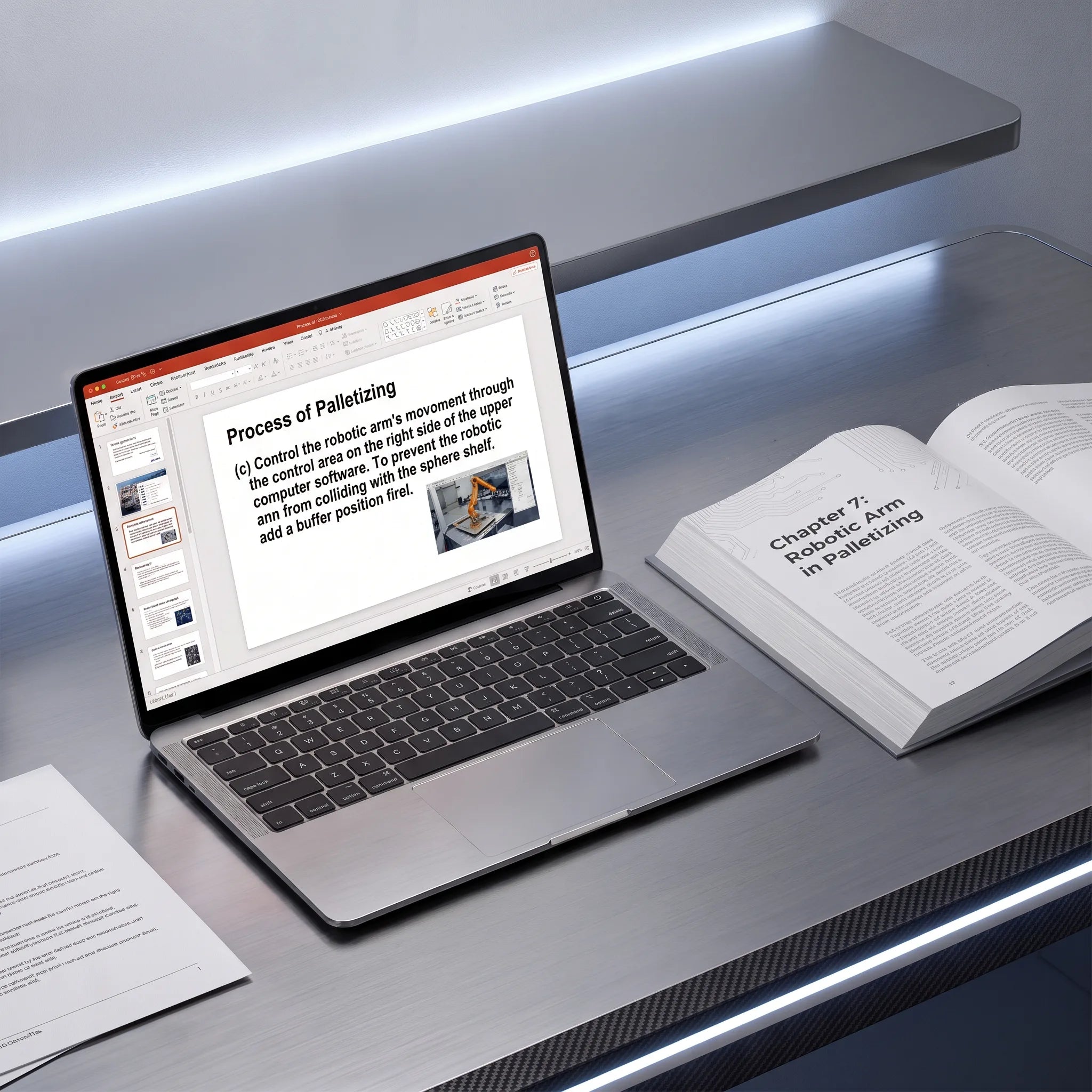
Explore a free sample from Week 3: Manual Control of Robotic Arms and see how the curriculum is structured for classroom use.
The sample includes lesson plans, presentation slides, student readings, and hands-on Mirobot activities, giving educators a clear view of the content, pacing, teaching approach, and student learning experience in the full 34-hour, 11-week curriculum.
Download Free Sample Chapter
EDUCATOR FAQ
Questions Educators Ask
It is designed for grades 9-12 and fits high school CTE, robotics, engineering, mechatronics, advanced manufacturing, STEM, and pre-engineering programs.
The curriculum is presented as 34 instructional hours. A clear pacing model is 11 weeks, usually about 3-4 hours per week.
A simple planning model is 13.5 hours of experiments and labs, 6.5 hours of instruction and demonstrations, 8.5 hours of programming and robot operation, 3.5 hours of quiz and review time, and 2 hours of final application or career-connection work.
The curriculum includes weekly teacher guides, lesson plans and PPTs, student readings, quizzes with answer keys, supplemental resources, and print plus digital access to more than 500 pages of content.
The curriculum is built around the WLKATA Mirobot. Access to the robot arm is recommended for the full hands-on classroom experience.
Yes. Free sample chapters are available, please download from the above section "Preview the Curriculum".
Yes. WLKATA accepts purchase orders from U.S. schools.